There are times when an organisation needs more senior leadership capacity than it currently has — but hiring another full-time executive is neither necessary nor necessarily the right answer.
A significant transformation may be underway. Growth may have exposed gaps in leadership capacity. A critical initiative may be losing momentum. An executive may have left unexpectedly. Or the business may simply need experienced leadership focused on an issue that the existing team does not have the time, capacity or specialist perspective to carry.
You may already know exactly where additional leadership capacity is required.
Or you may simply recognise that something important is not moving as it should.
Either is enough to begin the conversation.
Fractional leadership is deliberately more embedded.
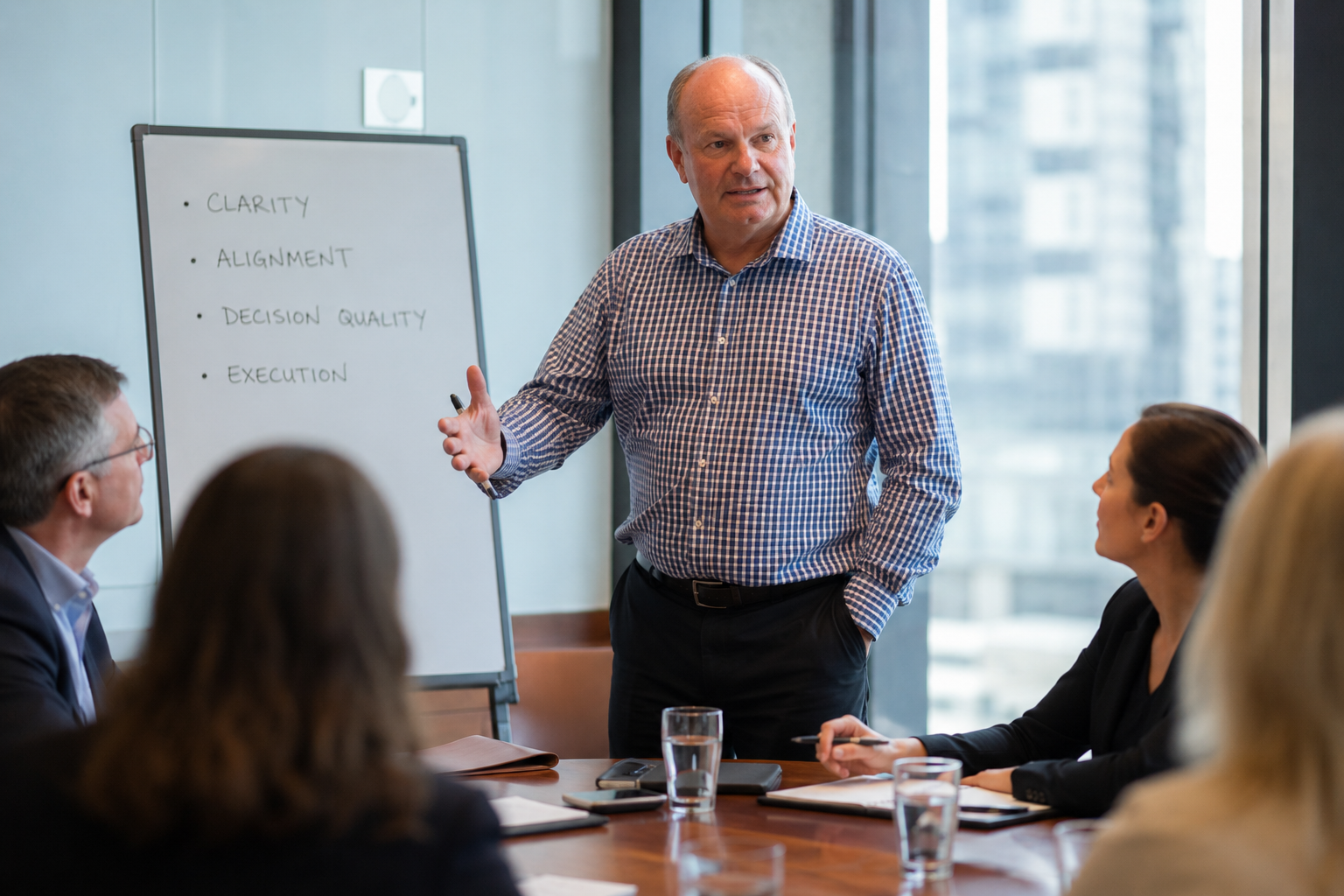
Ian works alongside the executive team, becoming close enough to the organisation to understand what is really happening, while retaining enough independence to challenge assumptions, surface difficult issues and keep attention on the outcomes that matter.
Depending on the engagement, that might mean leading a transformation initiative, strengthening operational performance, bringing structure to a period of rapid growth, supporting an executive transition, aligning teams around strategic priorities or taking responsibility for a significant piece of work that simply needs experienced leadership behind it.
The objective is not to create dependency.
It is to bring the right level of leadership into the business, achieve what needs to be achieved, and leave the organisation stronger for it.
Fractional leadership should not produce another document telling the organisation what it already knows.
Ian can step into the work itself.
That can include leading critical initiatives, chairing working groups, facilitating executive decisions, challenging assumptions, establishing clearer priorities and accountability, working across functional boundaries, resolving obstacles, supporting senior leaders and maintaining momentum between executive and Board conversations.
Where appropriate, he can also act as a bridge between the Board, CEO, executive team and operational leadership — helping ensure that strategic intent survives the journey into execution.
There is no standard fractional role.
An engagement begins by establishing the business challenge, the outcome required and the level of involvement that will genuinely make a difference.
Ian might work with the organisation for one or two days each week, become more intensively involved during a critical phase, or structure his involvement around particular meetings, decisions and deliverables.
The mandate is agreed upfront.
Progress is reviewed regularly.
And as the organisation develops the capability or capacity to carry the work internally, Ian’s involvement can reduce or conclude.
You get senior executive capability when and where it matters — without building a permanent position around a temporary need.
An internal executive inevitably operates within existing relationships, history, responsibilities and organisational assumptions.
An external consultant can maintain independence, but may never become close enough to the organisation to understand its realities.
Fractional leadership occupies the space between the two.
Ian becomes sufficiently embedded to understand the business and contribute meaningfully to its leadership, while retaining the independence to notice what others may have stopped noticing.
Works with the people closest to the business to understand what is actually happening — not simply what appears in reports or presentations. by connecting strategy with execution, strategic decisions get translated into priorities, ownership and action across the organisation.

Defines what needs to change, what success looks like, where responsibility sits and what deserves attention first - and challenges where neccessary, testing assumptions, raises uncomfortable questions and provides an independent perspective when established thinking is getting in the way.

Participates in the conversations, decisions and actions required to move the work forward - and keeps the critical work moving forward. Maintains focus, follows through on decisions and prevents critical initiatives disappearing beneath the pressure of business as usual.
This kind of fractional work is particularly suited to established, operationally complex businesses where decisions have immediate and urgent consequences — including manufacturing, industrial businesses, recycling and circular economy organisations, printing and related sectors, and organisations navigating significant operational or organisational change.
These are environments where commercial realities, people, operations and strategy collide.
And that is exactly where experienced leadership becomes valuable.